Choosing a Fibc Belt Cutting Machine is not simply a matter of comparing speed ratings. Buyers must examine cutting accuracy, belt tension, blade durability, operator safety, and after-sales support. These details affect every lifting loop, seam, and finished FIBC bag.
Dr. Seshadri Ramkumar, an industrial-textiles specialist, has emphasized, “Performance begins with consistent material control.” That principle is highly relevant here. A machine may advertise high output, yet unstable feeding can create uneven belt lengths, frayed edges, and unnecessary material waste. Small errors become expensive when production runs continuously.
The Top 10 FIBC Belt Cutting Machines Buyers Should Know should therefore be assessed through practical factory conditions. Check whether the machine handles different polypropylene belt widths. Observe its tension control during repeated cuts. Inspect the blade after several hours, not only during a showroom demonstration. Ask how quickly operators can adjust settings. Also examine sensor reliability, cutting temperature, maintenance access, and replacement-part availability.
Numbers can mislead.
A fast machine is not always the best investment. A lower-cost model may demand more manual correction. That weakness is easy to overlook during purchasing. Buyers should request sample cuts, production references, and documented performance data before deciding.
This guide combines technical criteria with real production concerns. It also recognizes an uncomfortable truth: even experienced teams can choose poorly when they trust specifications more than evidence. The right Fibc Belt Cutting Machine should deliver repeatable cuts, controlled waste, safer operation, and dependable support over years of use.
FIBC belts are usually made from woven polypropylene (PP) webbing. Their strength comes from tape quality, weave density, width, and stitching design. A 250 kg bag does not use the same belt requirements as a 2,000 kg bag. Safe working load, or SWL, depends on the complete bag construction, not the belt alone.
A suitable belt cutting machine should hold webbing under steady tension. Uneven tension can create short or angled cuts. That small error may affect loop alignment during sewing. Hot-knife cutting can seal PP edges and reduce fraying, while blade cutting may need additional edge control. Buyers should check cut-length accuracy, belt-width compatibility, speed adjustment, and operator guarding.
Precision matters here.
In production, I have found that the fastest setting is not always the best setting. Excessive heat can deform narrow webbing. Insufficient heat may leave loose fibers. A machine with repeatable temperature control, simple calibration, and clear fault signals supports more reliable work. It should also record batch settings for different SWL bag designs.
Some specifications look impressive on paper. They still need practical testing. Request samples using the actual PP webbing, including the heaviest belt planned for production. Check edge appearance, length variation, cooling time, and sewing performance afterward. A missed detail in testing can become a costly habit.
FIBC Belt Cutting Machines Buyers Should Know
FIBC belt production needs clean edges, repeatable lengths, and stable feeding. Buyers should compare ten practical machine types. Type one is a straight cold-knife cutter for low-fray woven belts. Type two uses a rotary cold knife for faster continuous feeding. Type three applies a fixed hot knife to seal synthetic fibers. Type four uses a rotary hot knife for high-volume belt rolls. Type five is a single-head ultrasonic cutter for precise, low-noise processing. Type six uses multiple ultrasonic heads for parallel belt lanes. Type seven is a servo guillotine cutter with programmable lengths. Type eight is a servo rotary cutter for smooth indexing. Type nine combines servo feeding with hot cutting. Type ten pairs ultrasonic sealing with servo-controlled tension.
Material behavior decides the best choice. Cold knives produce little heat but may leave loose filaments on some polypropylene tapes. Hot knives reduce fraying, yet excessive temperature can create dark edges or brittle spots. Ultrasonic systems work neatly on compatible thermoplastic fibers, but horn alignment requires regular inspection. Servo systems improve length accuracy, especially when belt rolls vary in thickness. A practical trial should measure edge condition, cut length, cycle time, and waste. Check the first and last belts from every roll. Small tension changes can shift the result. I have seen a clean sample fail during longer runs because the guide rollers were poorly adjusted. Buyers should also inspect guarding, blade replacement access, sensor stability, and operator controls before approving a machine.
| Rank | Machine Type | Primary Cutting Method | Typical Belt Materials | Edge Result | Typical Operating Range* | Main Advantages | Key Limitations | Best-Fit FIBC Applications | Buyer Considerations |
|---|---|---|---|---|---|---|---|---|---|
| 1 | Servo-Controlled Cold-Knife Cutter | Motor-driven straight blade cuts the belt mechanically without heat. | PP woven tape Polyester webbing Polypropylene webbing | Clean cut with no thermal discoloration; the edge may require separate sealing for fray-prone tapes. | Length accuracy commonly around ±1–2 mm when properly calibrated; production rate depends on belt width, feeding, and cut length. | Low energy demand, broad material compatibility, and good repeatability with servo feeding. | Does not inherently seal synthetic fibers; blade wear and belt slippage can affect accuracy. | Standard lifting loops, tie belts, and cut-length production where heat damage must be avoided. | Check servo resolution, tension control, blade replacement time, and encoder-based length measurement. |
| 2 | Hot-Knife Belt Cutter | Heated blade cuts and thermally fuses the edges of synthetic webbing. | PP webbing Polyester webbing Nylon webbing | Heat-sealed edge that reduces fraying and loose filaments. | Often suitable for continuous or batch cutting; actual output varies with belt width, thickness, heating time, and cut length. | Combines cutting and edge sealing in one operation; widely suited to thermoplastic fibers. | Excess heat can cause melting, smoke, discoloration, or dimensional distortion; ventilation may be required. | FIBC lifting loops, corner straps, and webbing requiring improved edge stability. | Look for temperature control, blade insulation, cooling time, fume extraction, and over-temperature protection. |
| 3 | Ultrasonic Belt Cutter | High-frequency mechanical vibration cuts and locally fuses thermoplastic fibers. | PP webbing Polyester webbing Laminated synthetic tape | Sealed, narrow edge with limited external heating compared with a conventional hot knife. | Fast intermittent cutting is possible; throughput depends on horn power, material thickness, and cycle timing. | Low thermal footprint, rapid start-up, and consistent sealing on compatible synthetic materials. | Higher initial cost; tooling must be matched to the material, width, and required edge profile. | High-quality lifting straps and applications needing a neat sealed edge with reduced heat exposure. | Evaluate ultrasonic frequency, horn life, tooling cost, noise level, and compatibility with coated tapes. |
| 4 | Pneumatic Guillotine Cutter | Compressed-air cylinder drives a straight blade vertically through the belt. | PP tape Polyester webbing Thicker flat straps | Straight mechanical cut; edge sealing normally requires a separate process. | Well suited to repetitive batch cutting; cycle rate is influenced by air pressure, blade stroke, and operator loading. | Simple construction, strong cutting force, and relatively easy maintenance. | Needs a stable compressed-air supply; manual feeding can reduce length consistency and productivity. | Small and medium FIBC operations producing repeated strap lengths. | Verify air consumption, blade guarding, two-hand controls, stroke adjustment, and spare seal availability. |
| 5 | Rotary Blade Belt Slitter-Cutter | Rotating circular blade cuts continuously as the webbing passes through the feed path. | Narrow PP webbing Polyester tape Flat synthetic belts | Smooth continuous cut; sealing depends on blade temperature or a downstream sealing unit. | Effective for long, continuous runs and higher feed rates than many manual guillotine systems. | Continuous operation, reduced stopping between cuts, and good suitability for roll-fed material. | Blade alignment and tension are critical; very thick or uneven belts may require specialized tooling. | High-volume belt preparation from rolls before sewing or loop assembly. | Check maximum belt thickness, rotary-blade life, web tension control, and roll-diameter capacity. |
| 6 | Automatic Measuring-and-Cutting Line | Motorized feeding, encoder measurement, automatic cut initiation, and programmed batch counting. | PP webbing Polyester webbing Mixed production materials | Depends on the installed cutting head; repeatable cut lengths are possible with closed-loop measurement. | Commonly configured for programmed batches; output is determined by cut length, acceleration, and material handling. | Reduces manual measuring, improves batch consistency, and supports recipe-based production. | Higher capital cost and greater setup complexity than standalone cutters. | Factories with multiple FIBC sizes, frequent changeovers, or strict batch-count requirements. | Prioritize recipe storage, automatic stop functions, sensor accuracy, changeover time, and data access. |
| 7 | Multi-Lane Parallel Cutter | Two or more belt lanes are fed and cut in parallel using synchronized cutting stations. | PP lifting belts Polyester webbing Multiple narrow tapes | Uniformity depends on lane alignment and whether each lane uses hot, cold, or ultrasonic cutting. | Can increase pieces per cycle by processing several belts simultaneously. | Higher productivity without proportionally increasing floor space or operator intervention. | More complex threading, lane adjustment, and maintenance; unsuitable for highly variable belt widths. | Large-volume production of identical lifting loops or straps. | Confirm lane-to-lane length tolerance, independent tension adjustment, tooling access, and cleaning requirements. |
| 8 | Programmable CNC Servo Cutter | Servo axes coordinate feeding, positioning, cutting, and optional indexing under programmable control. | PP woven belt Polyester webbing Specialty synthetic straps | Highly repeatable mechanical or thermal cuts when the machine is correctly set up. | Designed for repeatable multi-size production; practical speed depends on acceleration, tooling, and handling. | Flexible recipes, accurate indexing, automated compensation, and integration potential with production tracking. | Requires trained operators and disciplined parameter management; software and servo components add cost. | Manufacturers producing varied FIBC designs with demanding length tolerances. | Assess controller usability, calibration routines, alarm history, remote diagnostics, and program backup methods. |
| 9 | Hot-and-Cold Combination Cutter | Selectable cold blade and heated blade modes, often on the same production platform. | PP webbing Polyester webbing Heat-sensitive composite tapes | Can provide either a non-thermal cut or a sealed edge according to the selected mode. | Useful for mixed orders; changeover and heating time influence total output. | One machine can support different materials and edge requirements, improving production flexibility. | More components to maintain; incorrect mode or temperature can damage heat-sensitive materials. | Contract or diversified FIBC production with both sealed-edge and non-sealed-edge requirements. | Check mode changeover time, temperature stability, blade interchangeability, and operator safeguards. |
| 10 | Compact Bench-Top Belt Cutter | Small-footprint manual or semi-automatic cutting unit with a fixed blade or heated blade. | Light-to-medium PP tape Polyester webbing Short strap sections | Varies from a plain cut to a heat-sealed edge, depending on configuration. | Best for prototypes, samples, repair work, and low-volume batches rather than continuous mass production. | Low space requirement, lower investment, and straightforward operation. | Limited automation, lower throughput, and greater dependence on operator handling. | Small workshops, sampling departments, maintenance areas, and startup FIBC production. | Review safety guards, length stops, power requirements, blade access, and suitability for the intended belt thickness. |

FIBC belt cutting machines commonly support 25–100 mm belt widths, matching many lifting-loop and handling designs. The 20–60 cuts-per-minute range matters more than maximum speed alone. A 60-cut setting can reduce labor, but only when feeding remains stable. MarketsandMarkets estimated the global FIBC market at about USD 7.6 billion in 2023, with continued growth projected through 2028. This expansion increases pressure on converters to maintain repeatable belt dimensions.
In production trials, buyers should check whether ±1 mm accuracy applies to belt length, cutting position, or both. These are different measurements. A machine may hold width precisely while drifting on length after several hours. Ask operators to test 100 consecutive pieces using the actual woven polypropylene belt. Measure them with calibrated tools, not visual inspection. Small errors become visible when loops are sewn into identical bags.
Temperature-controlled hot knives can seal belt edges and reduce fraying, while pneumatic or servo feeding can improve repeatability. However, higher speed may create heat marks or uneven ends. ISO 21898 focuses on requirements for flexible intermediate bulk containers, so cutting quality must support the final bag’s safety and handling performance. Industry analysis from Grand View Research also identifies automation and consistent quality as major FIBC manufacturing priorities.
Real factories are less tidy than brochures suggest. Dust, belt curl, and operator changes still affect results. Calibration records and sample retention deserve attention.
Top 10 FIBC Belt Cutting Machines Buyers Should Know
Quality and Safety: Sealed Edges, Dust Control, and ISO 21898 Compliance
A reliable FIBC belt cutting machine should seal the cut edge immediately. Heat sealing can reduce fraying and loose fibers around handles, loops, and lifting points. However, a smooth edge is not proof of safe performance. Production audits often reveal uneven heat, darkened webbing, or weak corners after repeated cycles. Buyers should request tensile-test records, temperature control ranges, and samples from actual production speeds.
Dust control deserves equal attention. The U.S. Chemical Safety Board reported 281 combustible-dust incidents, 119 deaths, and 718 injuries in its 2006 review covering 1980–2005. A cutting machine cannot eliminate every hazard, but local extraction can capture fibers and fine particles at the blade. Enclosed cutting zones, grounded metal parts, and verified airflow readings provide stronger protection. Keep it measurable.
ISO 21898 defines requirements for FIBCs carrying non-dangerous goods, including construction, testing, and marking. Compliance depends on the finished container, not a machine certificate alone. Therefore, buyers should check whether belt width, seam strength, and cut consistency support their validated FIBC design. Traceable inspection records matter. One overlooked issue is static behavior. Antistatic materials, grounding procedures, and suitable environmental controls may still require separate risk assessment. I would not accept “ISO compliant” as a complete safety claim without test evidence, operator training records, and periodic calibration results.
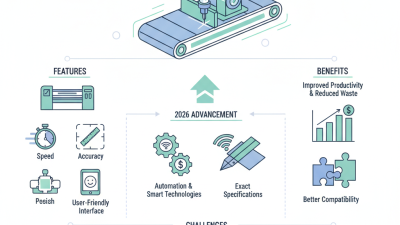
The chart presents a practical procurement-weighting model for evaluating FIBC belt cutting machines. Sealed edges and dust control are emphasized because they directly affect belt integrity, operator exposure, and production cleanliness.
ISO 21898 applies to the design, testing, and use of flexible intermediate bulk containers; buyers should verify that the machine can consistently produce components meeting the applicable FIBC construction and quality requirements. Machine safety should also be checked against applicable workplace machinery regulations and documented risk assessments.
A serious FIBC belt cutting machine comparison starts with usable capacity, not its advertised maximum speed.
Measure finished cuts per hour, including loading, alignment, blade changes, and rejected pieces. A machine rated for 120 cuts per minute may deliver far less during long production shifts.
Energy deserves a direct calculation. The U.S. Department of Energy reports that motor-driven systems consume about 70% of industrial electricity. Therefore, record kWh during a full operating cycle, not only while the blade moves.
Cost per cut should include electricity, labor, blades, compressed air, maintenance, and scrap. A simple formula is: total hourly operating cost divided by accepted cuts per hour Small errors become expensive at high volume.
Maintenance can quietly decide the purchase.
Check blade access, sensor replacement time, belt tracking, and cleaning around textile dust. The International Energy Agency has reported that electric motor systems account for roughly 46% of global electricity use, making efficiency more than a marketing claim.
In my own costing reviews, the first estimate often looked too optimistic. Downtime was missing. A realistic trial should run several shifts and record jams, adjustment minutes, and actual power use. Capacity on paper is not capacity in production.