7 Best Pneumatic Right Angle Drills for Global Buyers?
Choosing the right Pneumatic Right Angle Drill is not simply a matter of comparing prices. Global buyers must examine torque, speed, air consumption, chuck quality, and service support. A compact tool may fit neatly beside a vehicle frame, yet still struggle with thick steel or continuous production work. The best choice depends on the material, workspace, operator, and available compressor capacity.
Ron Marshall, a recognized compressed-air systems specialist, warns, “Compressed air is often the most expensive utility in a plant.” His observation matters here. A drill that consumes excessive air can raise operating costs, reduce productivity, and cause pressure drops across a busy workshop. Buyers should check the manufacturer’s tested air requirements, not rely only on attractive catalogue numbers.
This guide reviews seven Pneumatic Right Angle Drill options for international buyers. It considers practical details, including trigger control, gear durability, ergonomic grip, noise, and maintenance access. It also looks at supplier transparency, replacement parts, warranty terms, and regional technical support. These details are easy to overlook.
There is no perfect model. A lightweight drill may feel comfortable during assembly but lack enough torque for repeated metalwork. A powerful unit may perform well but tire the operator faster than expected. Product rankings can also change when local air quality, shipping conditions, and after-sales service are considered. That uncertainty deserves attention. Use these comparisons as a practical starting point, then confirm specifications with the supplier before ordering.
What Is a Pneumatic Right Angle Drill?
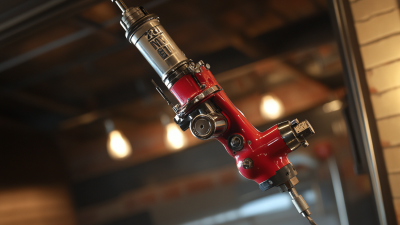
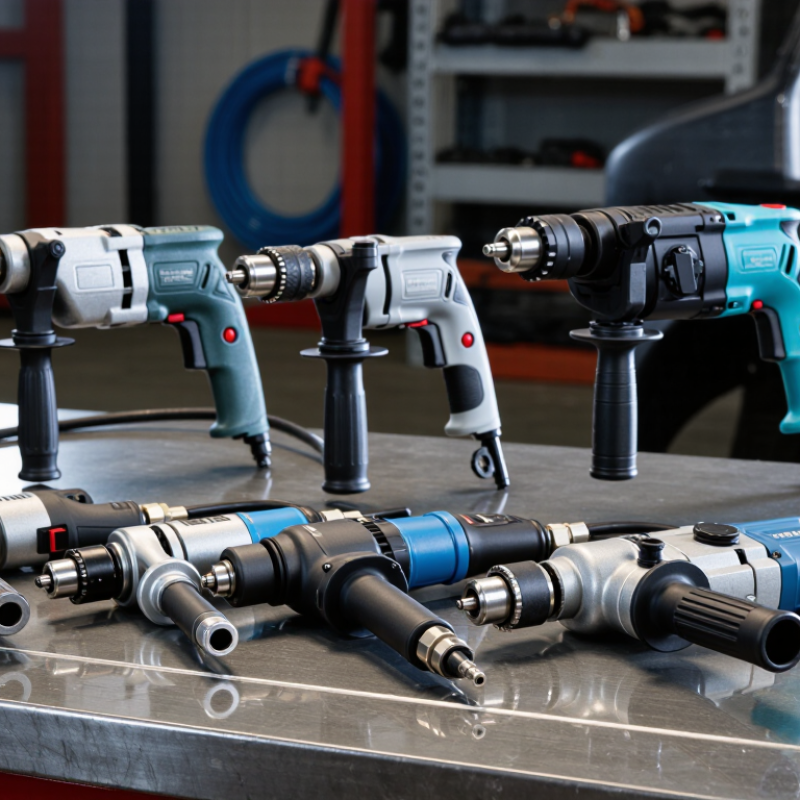
A pneumatic right angle drill is a compact air-powered tool with its motor set at a 90-degree angle to the chuck. This design helps operators drill where a straight drill cannot fit. It is useful inside cabinets, vehicle frames, aircraft structures, and narrow metal channels. Compressed air drives the internal vane motor, while the angled head transfers rotation to the bit. No internal battery is required.
In practical use, the tool feels light in the hand, but the air hose can limit movement. A stable compressor must provide the required pressure and airflow. Otherwise, the drill may slow under load. I have found that a short, flexible hose improves control around crowded workpieces. The operator should secure the material, wear eye protection, and keep loose clothing away from the rotating chuck. Small details matter.
Global buyers should compare chuck capacity, free speed, torque, air consumption, noise level, and head thickness. A compact head is valuable in confined spaces, but it may provide less torque. That trade-off is easy to overlook. Check thread standards, inlet size, maintenance instructions, and available replacement parts before ordering. Regular oiling can extend service life, although excessive oil may contaminate nearby surfaces. The best choice depends on the material, hole size, duty cycle, and compressor capacity—not appearance alone.
7 Best Pneumatic Right Angle Drills for Global Buyers
What Is a Pneumatic Right Angle Drill?
Definition:
A pneumatic right angle drill is a compact air-powered tool with a 90-degree head. It is designed for drilling, reaming, and light fastening in confined spaces where a conventional straight drill cannot be positioned easily. Typical operating specifications are based on a 6.2 bar / 90 psi air supply.
| Recommended Option |
Best Application |
Chuck Capacity |
Free Speed |
Typical Torque |
Average Air Consumption |
Approx. Weight |
Key Advantage |
| 1. Compact 6 mm Collet Drill |
Aircraft panels, cabinetry, electronics enclosures, and light sheet metal |
6 mm collet |
1,800–2,500 rpm |
3–6 N·m |
4–6 cfm |
0.8–1.1 kg |
Very small head and easy access in narrow spaces |
| 2. General-Purpose 10 mm Drill |
Maintenance work, fabrication, vehicle repair, and general workshop drilling |
10 mm keyed or keyless chuck |
1,200–1,800 rpm |
6–10 N·m |
5–8 cfm |
1.1–1.5 kg |
Balanced capacity, availability, and operating cost |
| 3. High-Speed Precision Drill |
Small-diameter holes in aluminum, plastics, composites, and thin steel |
6–8 mm chuck or collet |
2,000–3,000 rpm |
2–5 N·m |
4–7 cfm |
0.9–1.3 kg |
High rotational speed for clean, accurate small holes |
| 4. Low-Speed High-Torque Drill |
Large holes, heavy fabrication, structural steel, and demanding maintenance work |
10–13 mm chuck |
400–900 rpm |
15–30 N·m |
7–12 cfm |
1.8–2.8 kg |
Higher torque and improved control in tough materials |
| 5. Reversible Right Angle Drill |
Drilling and backing out fasteners in vehicle, machinery, and assembly work |
10 mm chuck |
700–1,500 rpm |
7–14 N·m |
6–10 cfm |
1.3–1.9 kg |
Forward and reverse rotation for versatile workflow |
| 6. Extended-Reach Angle Drill |
Deep frames, aircraft structures, cabinets, and hard-to-reach fastening points |
6–10 mm chuck |
800–1,600 rpm |
5–11 N·m |
5–9 cfm |
1.2–1.8 kg |
Longer nose improves reach without using an extension shaft |
| 7. Heavy-Duty Industrial Drill |
Continuous production, shipbuilding, heavy equipment, and industrial repair |
13 mm chuck |
500–1,200 rpm |
18–35 N·m |
9–15 cfm |
2.2–3.5 kg |
Durable housing and strong output for demanding production cycles |
Buyer Notes:
Actual performance depends on inlet pressure, hose diameter, compressor capacity, drill-bit size, material, and lubrication. For international purchasing, verify the required air inlet thread, operating pressure, noise level, chuck standard, spare-parts availability, and applicable safety requirements before selecting a tool.
Key Criteria for Evaluating Air-Powered Right Angle Drills
Choosing a pneumatic right angle drill requires more than comparing speed and price. Global buyers should examine torque, air consumption, and working clearance. A compact head helps inside cabinets, vehicle frames, and narrow metal channels. However, smaller tools may deliver less power under heavy load.
Check the rated operating pressure and required airflow before ordering. Your compressor must maintain stable pressure during repeated drilling. Otherwise, performance may drop halfway through a hole. A keyed or keyless chuck affects bit changes, grip, and maintenance. Also inspect the trigger design, exhaust direction, and handle shape. These details matter when operators work for several hours. In my experience, vibration is often underestimated. It can reduce accuracy and cause early fatigue.
Tips: Compare test data under similar conditions, not only maximum figures. Ask for noise, vibration, and durability information. Confirm thread sizes, hose compatibility, and available replacement parts. Buyers should also review applicable safety and conformity requirements in their market. Specifications can look impressive, yet real performance depends on lubrication, air quality, and operator technique. No drill is perfect. I would leave room for that uncertainty when selecting a tool for demanding production work.
7 Best Pneumatic Right Angle Drills for Global Buyers
Key Criteria for Evaluating Air-Powered Right Angle Drills
This indicative buyer-priority model assigns a 100-point evaluation weight to the factors that most affect pneumatic right-angle drill selection. Torque capacity and access geometry receive the highest weighting because they directly influence fastening performance and usability in confined spaces. Buyers should compare specifications at the same reference pressure, commonly 6.3 bar / 90 psi, and verify free speed, air consumption, tool weight, noise, and service requirements before purchase.
Seven Pneumatic Right Angle Drills Compared for Global Buyers
Seven Pneumatic Right Angle Drills Compared for Global Buyers
The seven pneumatic right angle drills were compared by speed, torque, weight, chuck size, air consumption, and head clearance. Compact 10 mm chucks suit light assembly, while 13 mm chucks handle larger bits. Adjustable speeds improve control on aluminum, steel, and composite panels. Torque matters more than headline rpm during drilling.
U.S. Department of Energy guidance reports that compressed-air systems can represent 10–15% of industrial electricity use, so efficient air demand deserves attention. A drill using 4 cubic feet per minute may reduce compressor loading compared with a similar tool using 7.
Ergonomics also separates these seven options. A 1.2 kg body feels manageable during overhead work, but balance changes with a long bit. Low-profile heads help inside cabinets and vehicle frames.
Buyers should check sound and vibration figures against ISO 28927-8 testing methods, not rely on vague “low vibration” claims. The European Agency for Safety and Health at Work identifies hand-arm vibration as a significant workplace risk, yet product sheets often omit realistic duty-cycle data. That is a weakness.
Specifications may look precise, but actual performance depends on hose length, filtration, pressure stability, and operator technique. A practical test at the intended 6.3-bar supply remains essential.
Global Purchasing, Safety, and Maintenance Considerations
For global buyers, selecting one of the seven best pneumatic right angle drills requires more than comparing torque figures. In field purchasing, I check air consumption, rated pressure, chuck capacity, head clearance, and service access. A compact tool may reach a narrow cabinet, yet its short body can create awkward wrist angles. Confirm the full specification sheet, not only the sales image. Regional compressor systems also vary. A drill designed for 90 psi may perform poorly on a fluctuating workshop line. Ask for test data under realistic pressure. This prevents expensive surprises.
Safety depends on preparation and daily discipline.
Use a regulated, filtered air line, then inspect the hose, couplings, trigger, and chuck before operation. Oil the tool according to its maintenance instructions, unless it uses another specified system. Excess lubricant can contaminate finished surfaces. Keep hands clear of the rotating bit. Wear eye and hearing protection in enclosed areas. Maintenance records should note operating hours, lubrication, bit changes, and unusual vibration. I have learned that vibration is easy to ignore until accuracy declines. Still, not every noise means failure. Inspect before replacing parts.
Tips:
Request a sample or controlled video test before bulk purchasing. Check spare-part availability, thread standards, manuals, and warranty response times in your market. Store the drill dry, release line pressure, and remove the bit after use. Build a small acceptance checklist. It may reveal a mismatch between advertised performance and actual workflow. Good procurement is cautious, measurable, and willing to revise an initial choice.